
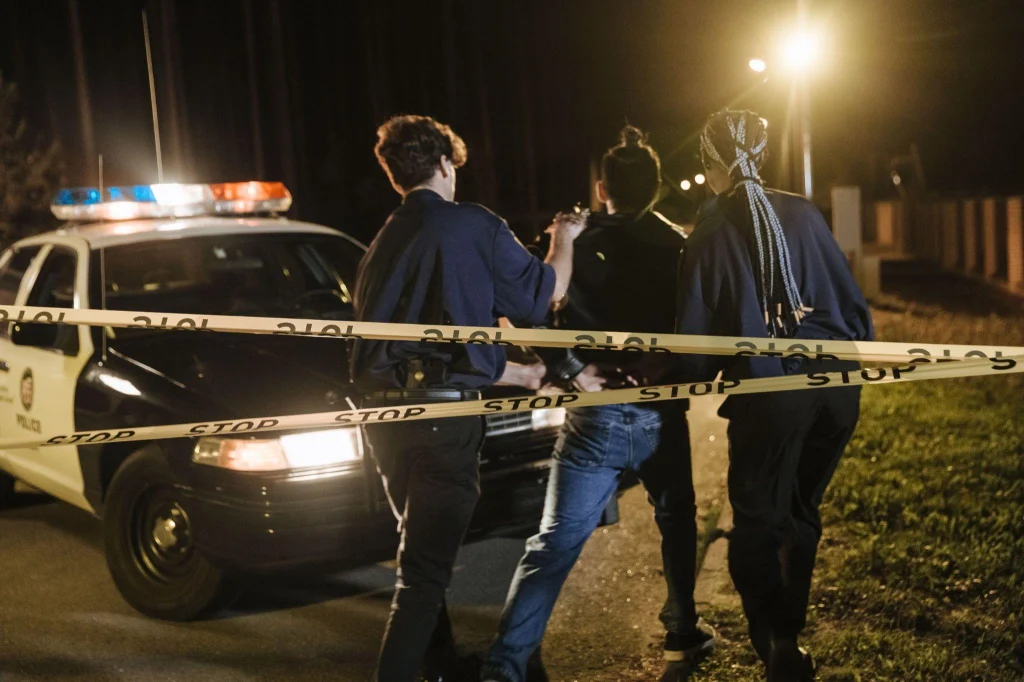
You’ve likely encountered them when driving through Wake County on a Friday night, when the flashing blue lights are stationed along the shoulder; they are a DWI checkpoint. Most drivers will spend just a few minutes at the stop.
But one of the few times that police in North Carolina can pull a driver over without a specific suspicion of wrongdoing is often when checkpoints are in place, and that’s why there are strict laws in North Carolina.
This article talks about the legalities of a DWI checkpoint in NC, what the officers can and cannot do, what the driver must do, and how a DWI checkpoint stop is challenged in court.
Is a DWI Checkpoint Legal in North Carolina?
The narrow exception to the police’s need to have reasonable suspicion or probable cause to stop a vehicle is checkpoints.
They are legal in North Carolina if they are managed in a manner that minimizes the discretion of the officers and ensures uniformity of treatment for all drivers. State case law, State v. Rose and State v. Veazey, clarifies what that entails.
If a checkpoint fails the standard, then any evidence found, including a breath test reading, can be suppressed..
The Legal Standard: Supervisory Approval and a Neutral Stopping Pattern
North Carolina courts look at two things when a driver challenges evidence from a checkpoint:
1. A valid “primary programmatic purpose.”
Since checkpoints are an exception to the Fourth Amendment, they must be fully compliant with the statutory restrictions; the burden is on the State to show that there was a legitimate, legal programmatic objective, and an officer’s personal purpose or intent is not a sufficient basis for the decision.
North Carolina courts have specifically rejected relying on an individual arresting officer’s personal purpose or intent when evaluating a purpose (State v. Burroughs).
2. Reasonableness under the Brown v. Texas balancing test.
The seriousness of the public interest served by the checkpoint, the extent to which the checkpoint actually promotes the public interest, and the extent to which the checkpoint encroaches upon individual liberty.
However, in practice, the State must demonstrate:
- Supervisor’s advance permission. Field officers can’t decide on their own to set up a checkpoint. The Court of Appeals in State v. White reinforced the principles of a lawful checkpoint:
It must be authorized in advance, stopped neutrally, and have the presence of officers readily visible to the public. - A fixed, neutral pattern. Officers must follow a predetermined plan, such as stopping every vehicle or every third vehicle, rather than singling out cars based on a hunch.
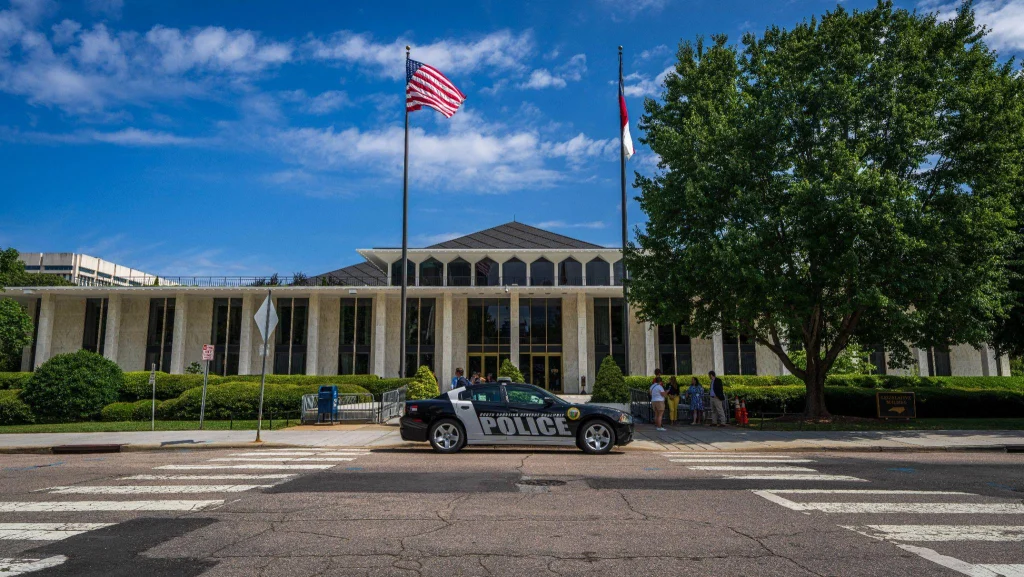
- Public notice. There must be signs visible that a checkpoint is operating at a minimum of a marked patrol vehicle with blue lights, and the location of the checkpoint should not be the same place every time.
- Limited disruption and a reasonable time. The duration of the delay for drivers and whether the time of day, location, and duration of the checkpoint are reasonable are also taken into consideration by courts.
The standard does not need to be repeated by trial courts; rather, they must make specific factual findings regarding these issues when a driver challenges a stop.
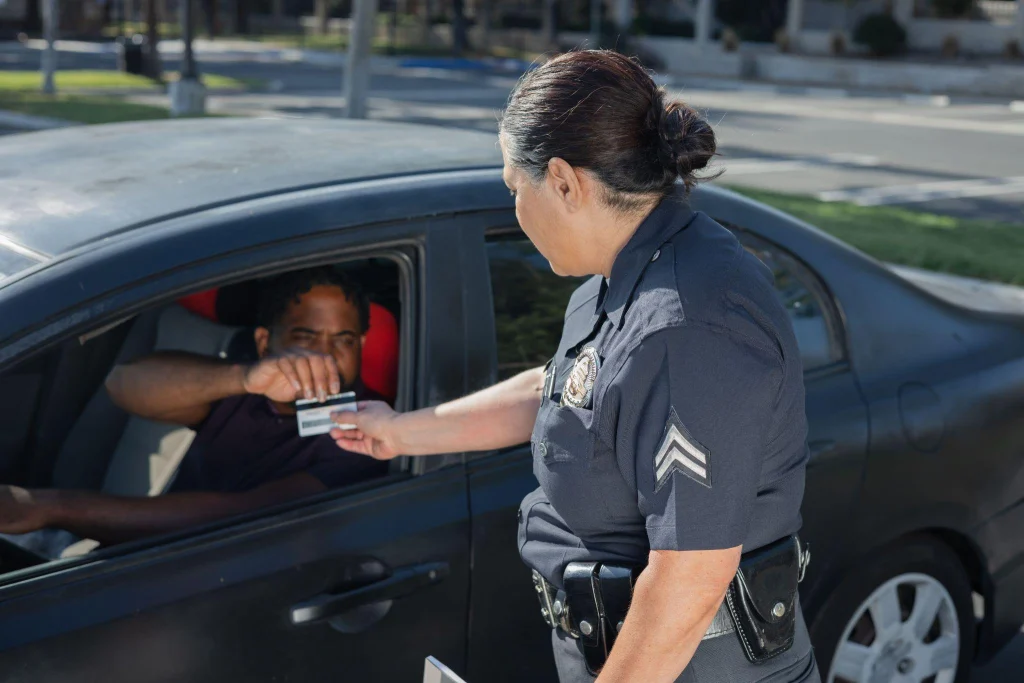
What Officers Can and Can’t Do at a Checkpoint
Officers generally can:
- Slow the traffic down (or cause all vehicles to slow down under the pre-set neutral pattern) for a short length of time.
- Request a license, registration, and proof of insurance.
- Look for physical clues such as the smell of alcohol, slurred speech, and bloodshot eyes.
- If those observations suggest that the driver may be impaired, the officers will pull the driver off to the side, step out of their vehicle and invite them to conduct field sobriety tests.
Officers generally cannot:
- Set up or move a checkpoint without supervisory, programmatic-level authorization.
- Identify and single out particular vehicles outside of the given pattern.
- Make you wait longer than is reasonable for routine checkpoint procedures without probable cause of a crime.
- Search your vehicle without a warrant, probable cause, or other recognized exceptions to the warrant requirement.
Your Rights and Obligations as a Driver
Understanding your sobriety checkpoint rights allows you to cooperate with the police, making sure you are not violating your rights.
You must:
- Stop as directed and give your license, registration, and insurance. Not giving your name may also result in a charge.
- Comply with North Carolina’s implied consent law. If lawfully arrested for DWI, you’ve already agreed to submit to a chemical breath, blood, or urine test for DWI when operating a motor vehicle on NC roads. A refusal of the post-arrest test does not end the case; it does result in an automatic license revocation for one year on top of any criminal charge, and prosecutors can discuss the refusal at trial.
There are no requirements for you to:
- Answer questions beyond your identity; you can say no to questions like where you’re from or if you’ve been drinking or not, but bear in mind that if you have been drinking, and the officer smells the odor of alcohol, they will likely ask you to pull over to conduct standardized field sobriety tests and investigate you for DWI.
- Do voluntary roadside field sobriety tests or preliminary breath tests before arrest. These are not the same as the post-arrest chemical test covered by implied consent, and consequences for refusal are less severe, if any, but can be part of the consideration for an arrest. Also note that officers will often arrest you for DWI for refusing to complete these tests, and suggest that you refused as evidence of a guilty mind.
- Allow searching a car without a reason or without any legal reason.
How Checkpoint Stops Are Challenged in Court
Since the checkpoints are a narrow exception to the normal Fourth Amendment rights, DWI defense lawyers routinely file a motion to suppress by challenging the checkpoint itself instead of the manner in which the driver conducted themselves.
Common angles include:
- No documented purpose or written plan —if the agency is unable to demonstrate a supervisor’s authorization for the checkpoint for a legitimate purpose, it could be voided.
- No neutral stopping pattern — officers could have chosen which cars to stop, or failed to follow the pattern they set.
- Inadequate notice or excessive duration — warning lights not displayed or no warning signs/checkpoint exceeded allowable time.
- Insufficient trial court findings — when Judges fail to explain why they are ruling on a location, or whether the officers have written guidelines to follow, cases get sent back.
- General crime control disguised as a safety checkpoint — when the actual intent was to search for drugs rather than screen for impairment.
When a court throws out an unlawful checkpoint, anything that happens as a result of the checkpoint, such as a DWI arrest and any breath or blood test results, can be thrown out, which can usually wreck the state’s case.
Bottom Line
DWI checkpoints in North Carolina are legal, but only if the police follow a strict set of rules: advance supervisory approval, a legitimate public-safety purpose, an objective and non-discretionary stopping pattern, public notice, and reasonable delay times.
If any piece is not available, the stop (and the remainder of the evidence obtained by police) is susceptible to attack.
When stopped by a checkpoint in Wake County or anywhere else in North Carolina for DWI, the information that’s gathered about the planning and operation of that checkpoint could be crucial to the outcome of your case.
A savvy NC DWI lawyer can obtain the plan and documents of the stop and check the supervisor’s authorization sheets and body camera video to see if your stop was conducted in compliance with the law.
Stopped at a police checkpoint and charged with DWI? Don’t take it for granted that the charge will be automatic. Speak with Granados Law Group today and determine if the checkpoint you were arrested for was legal.



 ES
ES